There are different reasons why a quick yes from your team may not see your team through the change process.

Novelty is a dopamine trigger. (Sebastian Haesler, n.d.) For most people, trying something new is invigorating – especially if they are unhappy with their current situation.
Novelty is a dopamine trigger.
This is why many teams say they’re eager to transition to a new platform:
The image of the “Change Curve” (Mind Tools, 2016) is commonly used in change management to describe the dip that happens during every change. Every single time. If you don’t go through change frequently, you may be more confident about how well it will go because you don’t realize how challenging it’s going to be.
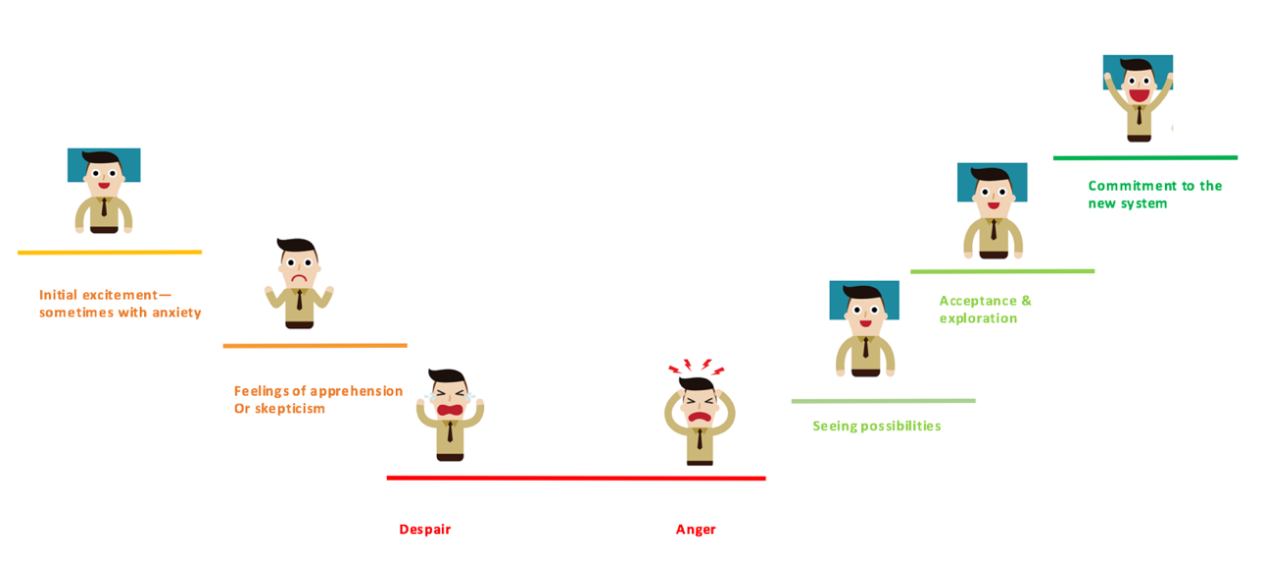
This progression matches another curve you may have heard about:
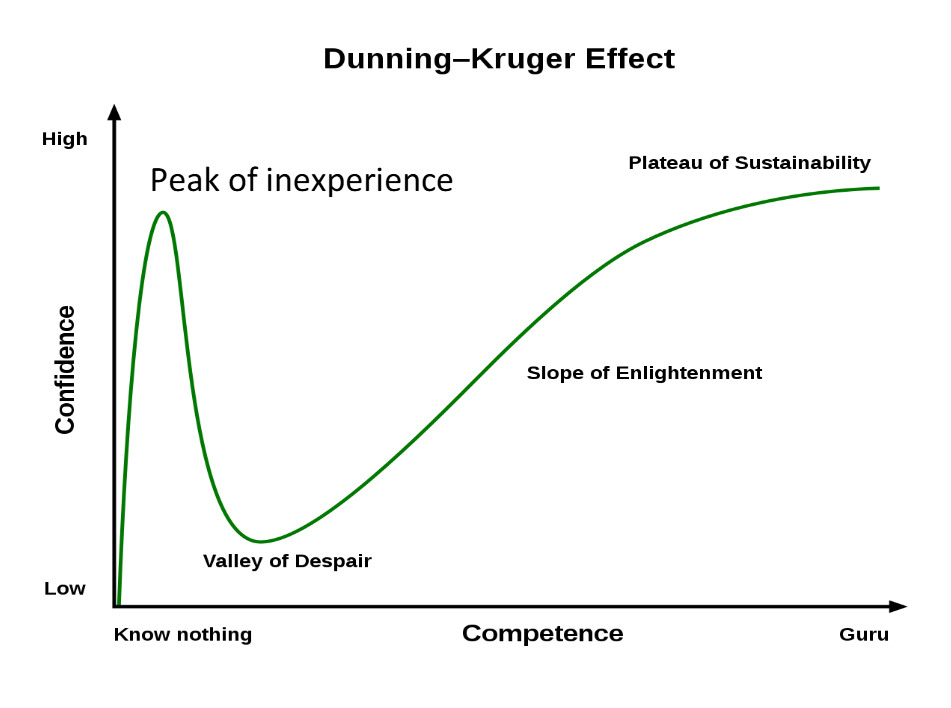
The Dunning-Kruger curve also displays the course of change.
Before a team realizes the impact of change on an organization, they are quite confident that it will go according to plan. As they experience the impact of people being overwhelmed with deliverables, with things that don’t work as expected, and as unmet requirements pile up, teams hit the nadir: the Valley of Despair.
Peak of inexperience: Inexperience with change plays a part in individuals being eager to start a change project.
Change Readiness prepares organizations for complications that lead to that low-point and accelerates the competence curve.
Some organizations don’t have a culture of candor. This is especially true for organizations that are more bureaucratic, hierarchical and driven by a strong leader. If being frank isn’t part of the organization’s DNA, staff will revert to the safest possible answer.
What may seem like a team eager to embrace a challenge may actually be a team that is feeling uncertain and afraid of speaking their minds. A team like this will struggle profoundly with change. A team that is fearful of giving honest feedback is more likely to engage in covert resistance and quietly slowing the change.
An effective team may stop backing a change if they are overwhelmed by learning a new system while completing their usual deliverables. Many leaders fail to think about capacity saturation while they are scheduling training or other activities needed to support a change.
Many leaders fail to think about capacity saturation…
If a change impacts key performance indicators or impacts the metrics by which individuals are compensated or measured, they will resist change.
If the impact of the change wasn’t clear from the outset, they might initially support the change, but then resist it when they discover that it is not in their best interest.
With the Cirrus Change Readiness Platform, organizations can quickly learn change competencies to diminish the dip that accompanies change.
Change Readiness accelerates the competence curve and uncovers concerns that teams might not want to openly discuss.
You wouldn’t jump into a car for a massive road trip without checking out a map, highway construction, or available accommodations. Starting a change project isn’t too different. Successful change takes planning, even for the best teams.
Interested in learning more? Go to https://www.cirruschange.com to learn more about our Quality Matters certified process. Contact us at: engage@cirruschange.com or call +1 608 338 5032

